TB Spain Injection achieves significant gains in its production capacity with two MiR robots
TB Spain Injection (TBSI) is a company specializing in the transformation of plastic materials by injection for the automotive sector and is part of the French TBI Group. Products manufactured at its plant located in Vigo are incorporated into the operation of car seats, electrical wiring, and engine compartments that are integrated into vehicles produced by the Groupe PSA, Volkswagen, Renault-Nissan and Ford brands. .
With a staff of between 40 and 50 workers, the plant has 15 machines for plastic injection, welding and assembly of parts, together with a warehouse for raw materials and finished products. The production lines operate 5 days a week in three shifts per day, so for Manuel Canitrot, Director of the plant, the implementation of technologies for automation and digitalization of processes, control and management, which are included in the dynamics of the “FÁBRICA 4.0” has been an important factor in helping them increase the competitiveness of the company and improve the quality and reliability of their products.
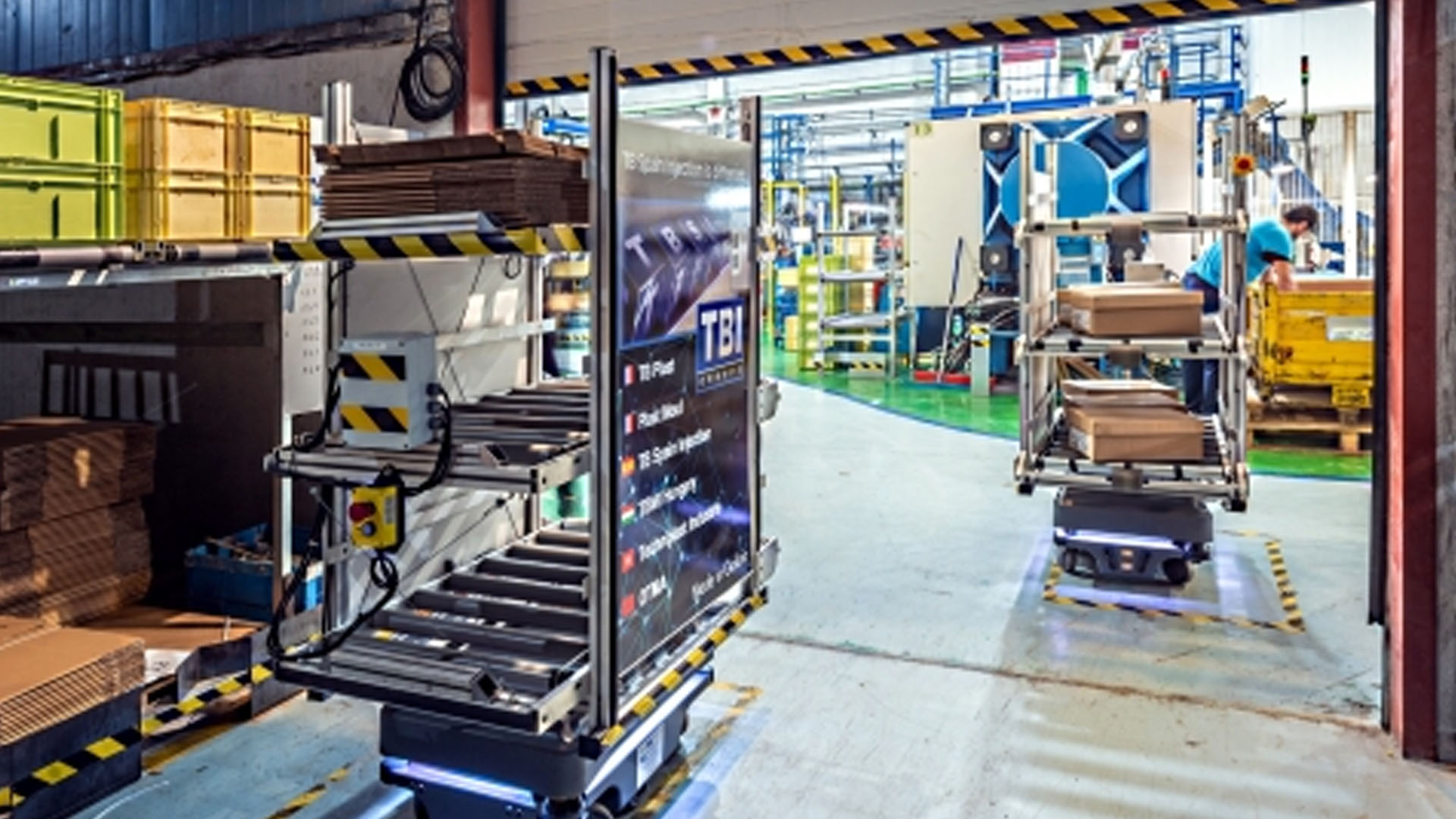
” We needed to optimize the distribution of the machinery in the plant and streamline the flow of materials, in order to gain useful space for production, optimizing the really productive surface, and to grow with the implementation of more machines in the same space than we currently have it , ”says Manuel. “We therefore decided to implement two MiR200 ™ robots, equipped with automatic racks to collect packaging materials from the warehouse, take them to the production line and return with the finished product already packed.”
The two MiR200 ™ were acquired by TBSI thanks to a grant, led by CEAGA (Cluster of Automotive Companies of Galicia), from the ‘Industry 4.0 Pilots’ program of the Galician Institute for Economic Promotion (IGAPE) with funds from the EU, and designed to increase the competitiveness of Galician companies through innovation and technological development.
Now, when a production operator needs a material delivery, he calls the robot with a PDA using a QR code that contains the information the robot needs to find the location where the materials are. The robot goes to the warehouse shelf where they are located, they are automatically loaded onto the robot’s shelf, and the robot begins its journey to the production point where it has to deliver them. Afterwards, the finished product is collected for its transfer to the distribution area in the warehouse.
In this way, the line workers receive the exact amount of materials they need when they need it, and TBSI has also eliminated the presence of pallets on the floor around the worker, with all the improvements in terms of space, occupational safety and ergonomics that this carries.
“With the floor space that we have recovered by eliminating the use of pallets, we have been able to expand the number of production machines from the 9 we had to the current 15”, says Manuel Canitrot.
The MiR200 robots work 24 hours a day during the three shifts that TBSI operates in the plant on a daily basis and from the moment of their first start-up, they have traveled some 500 kilometers, so the company estimates that they do almost 100 km per month. This translates into savings of up to 16 hours a day in terms of labor, which is equivalent to the work of two operators who are now dedicated to higher value tasks in the warehouse. The company has also achieved a much safer environment for workers thanks to MiR robots, as the movement of forklifts through the aisles of the plant posed a greater risk of workplace accidents.