
India’s Auto Industry Charts Aggressive Biofuel Roadmap at SIAM’s 4th International Conference!
By Ashutosh Arora
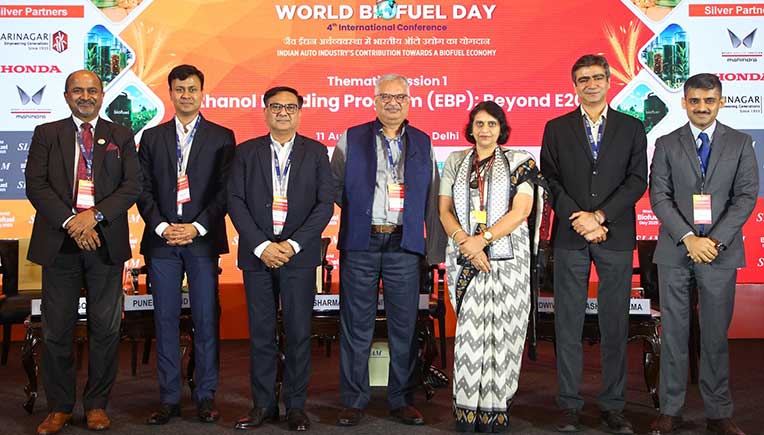
The Society of Indian Automobile Manufacturers (SIAM), under its flagship Jaivik Pahal (Bio Initiative) programme, hosted the 4th International Conference on World Biofuel Day 2025 in New Delhi, reaffirming the Indian auto sector’s commitment to accelerating the biofuel transition. With the theme “Indian Auto Industry’s Contribution Towards a Biofuel Economy”, the event brought together policymakers, global biofuel experts, automotive leaders, and sustainability advocates to outline a unified vision for a cleaner, biofuel-driven mobility future.
The conference opened with the session “Charting the Roadmap for Biofuel Adoption in the Country”, setting the tone for discussions on policy frameworks, technological advancements, and coordinated industry action. SIAM Executive Director Prashant K Banerjee welcomed delegates by highlighting ethanol adoption as a key enabler of India’s climate goals, urban air quality improvement, and rural prosperity. He stressed that biofuels, driven by innovation and public-private partnerships, could become a defining feature of India’s global identity in sustainable mobility.
Guest of Honour Sanjeev Chopra, Secretary, Department of Food and Public Distribution, celebrated India’s early achievement of 20% ethanol blending—five years ahead of the 2030 target. He credited this success to the 2018 National Biofuel Policy and the expansion of eligible feedstocks. Brazilian Ambassador Kenneth Félix Haczynski da Nóbrega, representing one of the world’s leaders in biofuels, underscored the importance of stable regulatory frameworks alongside technology, noting their role in delivering cleaner air, rural growth, and energy security.
Industry leaders shared sector-specific contributions to India’s biofuel journey. RS Sachdeva of VE Commercial Vehicles discussed progress in biodiesel blending and biogas integration into CNG, while emphasising the need for feedstock reliability and cross-sector collaboration. Ryuta Niimura of Honda Motor Co., Japan, highlighted ethanol’s carbon-neutral potential, compatibility with current infrastructure, and its ability to support local economies. From the gas distribution sector, Kamal Kishore Chatiwal of Indraprastha Gas Ltd projected that biogas could make up 10% of CNG by 2030, provided feedstock aggregation and municipal waste segregation challenges are resolved. Niraj Shirgaokar of The Ugar Sugar Works Ltd advocated for phased ethanol blending increases beyond E20, ensuring environmental gains align with farmer income growth.
The event featured three thematic sessions exploring critical enablers for scaling biofuel use. The first, “Ethanol Blending Program: Beyond E20”, led by Puneet Anand of Hyundai Motor India, examined technical readiness and policy support for higher blends, noting that most new vehicles are already E20-compliant. The second, “Developing Advanced Biofuels”, chaired by Harjeet Singh of Hero MotoCorp, spotlighted innovations in 2G ethanol, compressed biogas, and low-carbon fuels. The third, “Sustainable Feedstock for Atmanirbhar Biofuel Production”, moderated by R Ramaprabhu of Mahindra & Mahindra, addressed raw material security, including promising new crops like sweet sorghum. A context paper, “Ethanol’s Role in India’s Decarbonisation Journey”, was also released, providing practical steps for scaling adoption.
Closing remarks reinforced the message that achieving India’s clean mobility vision will require deep collaboration between government, industry, and research institutions. Biofuels were positioned not only as an environmental necessity but as a catalyst for economic resilience, rural empowerment, and technological leadership on the global stage.
Founded with a public-service mandate, SIAM continues to champion cleaner mobility, road safety, and emissions reduction while supporting the auto industry’s role in India’s economic growth. Through initiatives like Jaivik Pahal, the organisation is aligning industry goals with national sustainability priorities, ensuring that the road to decarbonisation is both inclusive and future-ready.