Defying the Global Situation with a Strong Corporate Strategy
Mr. Liske, you have now been CEO of the technology group Kellenberger for around 100 days, bearing responsibility for all strategic decisions worldwide in this position. How do you see Kellenberger positioned for the future?
Let me begin by briefly outlining the decision-making levels at Kellenberger: at the top is the Board of Directors, of which I am a member alongside the representatives of our shareholder. Within this body, we have defined, through the transformation program ‘ONE Kellenberger’, the strategy for a successful future for all Kellenberger sites worldwide. We are a global player and must act as such! Our Regional Presidents know their respective markets very well and can implement the objectives precisely there. Together, these executives form our Global Leadership Team.
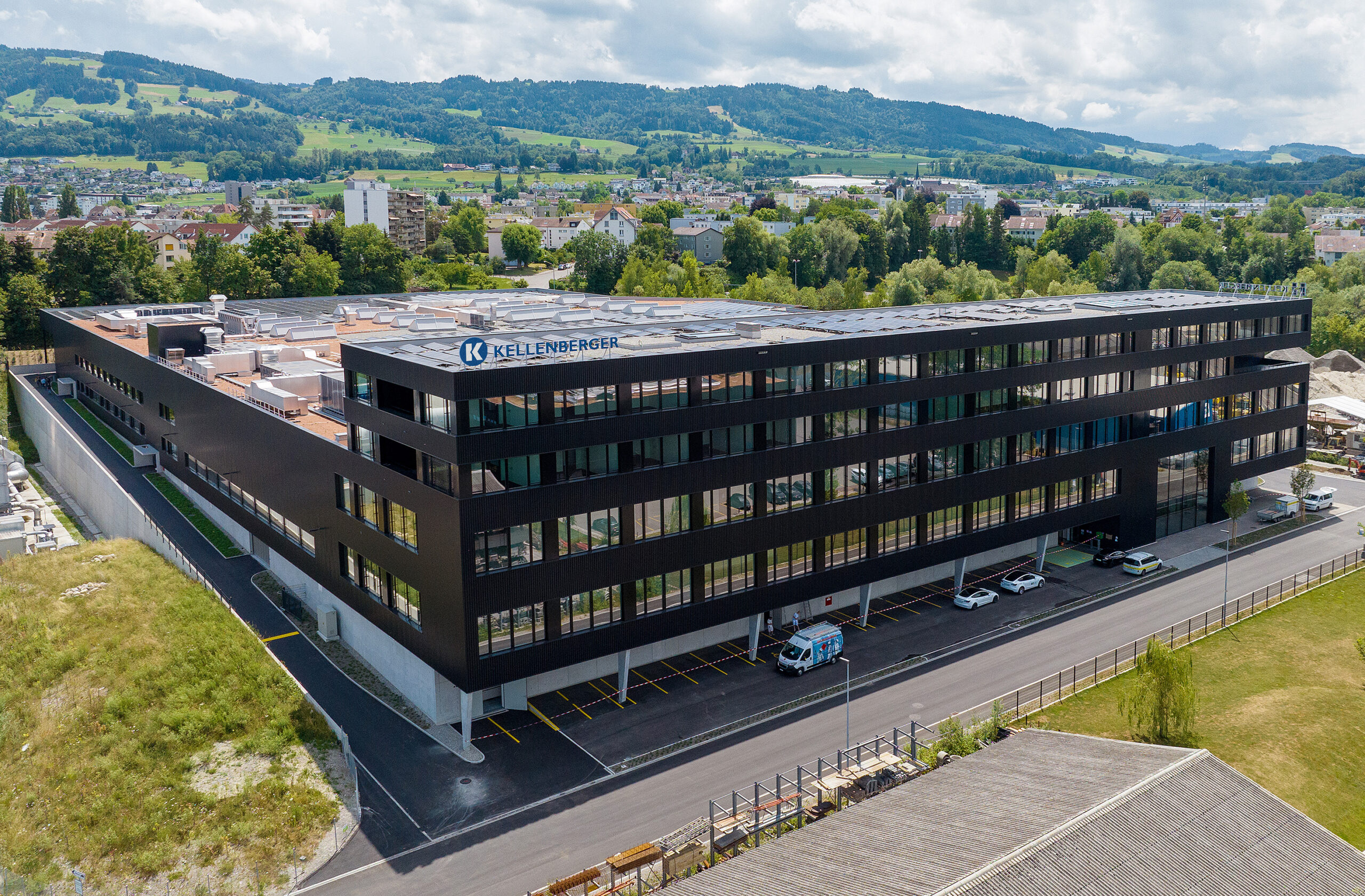
As CEO, I see my task as bringing our strategy to life in day-to-day business and, among other things, driving the integration and expansion of new technologies. In doing so, we are continuing what has already been started in recent years — including the introduction of turning and milling technologies as well as the construction of our new company headquarters here in Goldach.”

Im Gespräch mit Carsten Liske, neuer CEO bei Kellenberger
With myself and our CFO Norbert Finger now based in Goldach, the company’s headquarters were relocated from the United States to Switzerland. Here, in the new plant, that we have put into operation two years ago, we manufacture our European premium products. From the very beginning, sufficient production space was planned into the construction to allow for future growth — and that is exactly what we will continue to pursue.
The global situation, with its many wars and crises, is not exactly easy at the moment. And the important automotive and mechanical engineering sectors in particular are struggling worldwide. To what extent is optimism nevertheless justified?
“Of course, geopolitical upheavals affect global trade, cause disruptions in supply chains, and impact market stability. The U.S. president’s tariff policy is not exactly helpful either. We draw our strength from our position as a global player. Building on our more than 100-year history, Kellenberger today ranks among the most successful precision engineering machine manufacturers. For decades, we have been present with major production sites in the three regions of Europe, North America, and China. These sites operate independently in their daily business and also develop their own product lines, tailored to the respective markets. This allows us to offset challenges that may arise in individual markets. In today’s relevant market segments, we are not only technologically well positioned but have also earned the trust of our customers over many years.
In China, we have been present as a manufacturer for more than 30 years, and our highly capable team there builds machines specifically developed for the Chinese market and its requirements. We already serve many customers in important future-oriented industries such as medical technology, where they rely on the high precision of our machines. This is particularly true in cases involving the machining of highly complex parts — for example, zero-backlash planetary gear systems which are used in the joints of humanoid robots, enabling their movements to closely resemble those of humans. In the future, such robots will play a major role in healthcare, be it in hospitals or in elderly care.
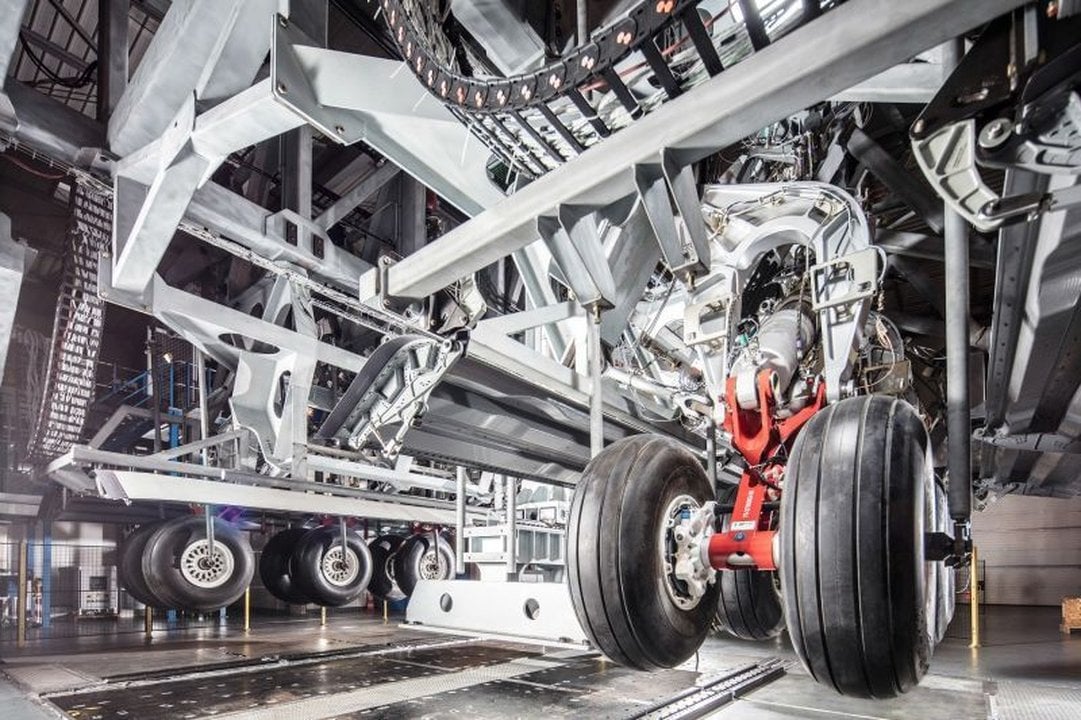
We have also adapted to the specific customer requirements of the American market. For decades, our modular USACH machines have served the market for special solutions, for example in the aerospace and semiconductor industries. The U.S. market, particularly in aerospace, is a growing market of the future. With our Kellenberger U-machines, we offer aircraft manufacturers and operators customized solutions, for instance for machining landing gear components or aircraft engine parts.
At the same time, it is equally important for us to continuously tap into new markets and segments. We currently see great growth potential in the ROW region, meaning Asian countries outside China. We will therefore intensify our activities especially in India and Southeast Asia. To this end, we are establishing a ‘Regional Head Office Sales, Service, and Application’ in Kuala Lumpur, Malaysia, which will also manage our site in Bangalore, India. We observe that some competitors are withdrawing from these regions, which in my view is a missed growth opportunity.
The industry is currently laying off skilled workers on a large scale. What is the situation like at Kellenberger?
Kellenberger entered into an extensive innovation mode years ago, introducing a new machine philosophy. Instead of a product line-based structure, we have transitioned to a modular design that enables a wide range of technically compelling configurations, thereby allowing for a highly customer-focused approach. Particularly in this area of customized solutions, we are often more flexible than our competitors, which in some cases also gives us price-performance advantages. This year, partly for these reasons, we are able to report clearly above-average growth compared to the machine tool sector overall, and we are gaining market share in all regions.
Our consistent expansion of the portfolio over the past years is also paying off. In addition to grinding, we have increasingly integrated turning and milling technologies. Moreover, our high-precision Kellenberger Super Precision machines for hard turning in the premium segment will in the future be manufactured in Switzerland, with customer-specific turnkey projects being implemented with customers in the respective regions.

CEO Carsten Liske in the Kellenberger Headquarters in Goldach
New to our portfolio is the turning-milling center KELLENBERGER TM300, which offers great flexibility for both 5-axis turning operations and complete 6-side machining. For our customers, this means that in the future they can obtain every machining technology they need for their production in premium quality from our company. The fact that we are highly successful across such a broad spectrum is also reflected in our figures. Growth in machine sales means that, contrary to the market trend, we are actively hiring. In particular, mechatronics engineers, application specialists in the fields of grinding, turning, and automation, as well as qualified service staff will find attractive opportunities with us, all over the world.
We are also benefiting from the fact that some competitors are currently preoccupied with internal issues, and some are even outsourcing service activities. In the long run, this is a fatal mistake and sends the wrong message to customers. For us, proximity to the customer is of paramount importance — especially in service, which must always be available wherever our customers are. As in all areas, we are fully committed to customer orientation here as well. This means that we are present with local service staff in every region to ensure a fast response to service requests and to meet customers on equal footing in their own environment. In addition, our online service platform provides support in all areas — from scheduling service appointments and maintenance contracts to spare parts orders and software updates.
The Kellenberger portfolio has so far been divided into brands, including well-known names such as Voumard and Hauser. These brand names will now be phased out. Isn’t that confusing for customers, at least where existing installations are concerned?
We are, of course, fully aware of the importance of the brands in our portfolio. Voumard, for example, was one of the pioneers in internal grinding technology and was market leader in Europe — if not worldwide — for decades. Even today, the precision of these machines sets standards. To ensure that this remains the case, we have not only continuously developed the Voumard machines in recent years, but completely redesigned them. Today, these machines are marketed as Kellenberger VM machines. The same applies to Hauser machines in the field of jig grinding, which in the future will be integrated into the Kellenberger H-series. We use the original brand names as abbreviations, among other things, to indicate the respective technology. For example, Kellenberger machines representing external grinding technology are now logically called Kellenberger K-machines.
Naturally, there are already thousands of our machines on the market that still carry the old designations. This is why I would like to highlight another area that offers great growth potential for us and which we are actively expanding — retrofit. There are thousands of Voumard machines in operation worldwide, many of which are now aging and therefore require refurbishment or even a complete retrofit in order to continue delivering top-level results. Such overhauls are always worthwhile, as they restore the machines to the highest levels of precision and competitiveness.
The KELLENBERGER K1000 and its predecessor models KEL-Varia and VARIA, of which several thousand units have been delivered worldwide, are also ideal for retrofit and thus for a ‘second machine life.’ A well-known spindle manufacturer, for example, operates over 100 machines from our company and continues to invest with us. Thirty of these machines are now undergoing a comprehensive retrofit. The important point is this: all our machines are designed to be energy- and resource-efficient, contributing to low lifecycle costs thanks to high-quality and durable components. Moreover, due to their modular design, it is significantly easier to replace components when wear occurs, essentially allowing the machine to be ‘retrofitted’ as needed. And as always, everything is done with the customer’s best interest in mind.”
Mr. Liske, thank you for talking to us. The interview was conducted by Andrea Jäger, freelance journalist from Germany.