
The machining of thin-walled parts for a wide variety of applications and industry sectors is often the result of extensive machining to the near net shape from large billets. The particular challenge for these machining processes is that complicated component design often makes these parts very unstable to machine and susceptible to vibration. This creates a specific set of demands that are placed upon the design and utilization of the cutting tools.
For the customer, it is important that these parts are preferably machined in a single clamping system. In order to meet this demand, the machining of as many surfaces as possible in a single set-up is a necessity. As a consequence, the workpiece is not optimally supported and tends to vibrate. Thin webs, voids and interrupted machining generate widely fluctuating stock removal rates and this calls for special tool solutions from specialists like MAPAL.
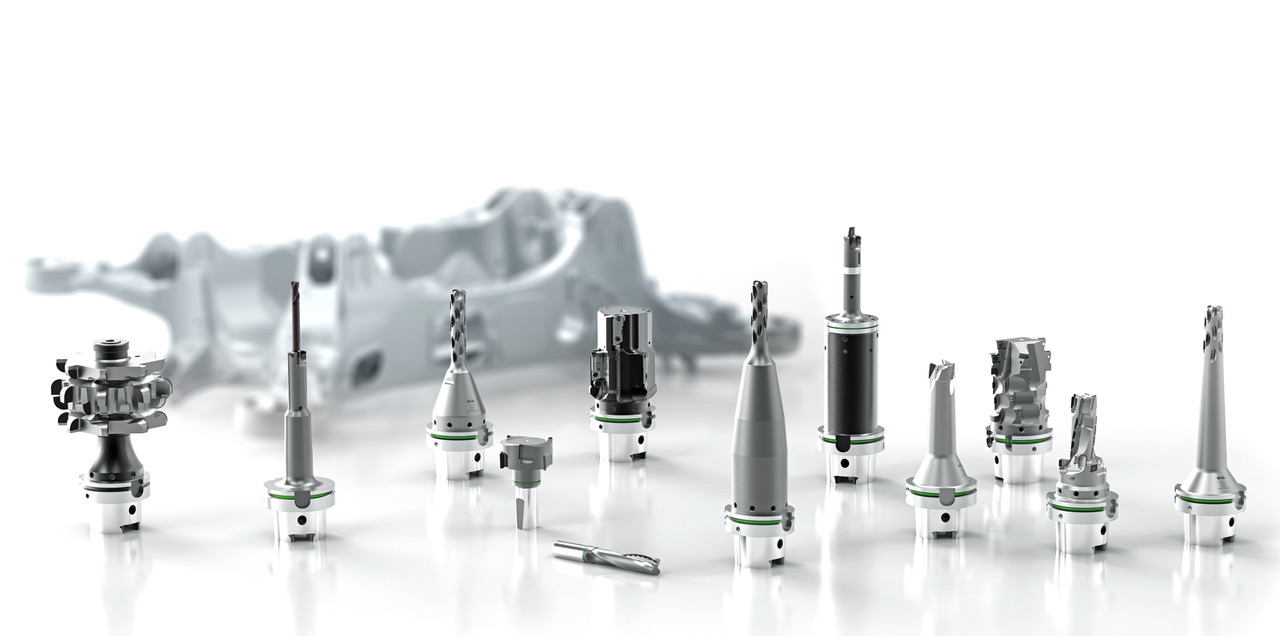
For large parts with a great many machining steps, this would require a huge number of tools. The expedient merging of these steps using combination tools in order to reduce the non-productive times and the number of tool slots is therefore the ideal solution.
Thanks to its vast understanding of processing unstable structural parts, MAPAL can offer cost-effective and reliable processes. Three aspects are of particular importance here. Firstly, the adjustment of the cutting rate is a factor for reducing or avoiding rising vibration. Vibration of the tool can result in short tool life and poor machining results. The latter would result in a recoiling of the part against the cutting edge and this could damage to the tool. The second important adjustment in the tool design is the evaluation of the tool body. Vibrations can be reduced by an appropriate design and choice of material. Furthermore, an intelligent arrangement of the cutting edges in form and position helps to keep the cutting forces low. And finally the machining process itself offers possibilities for reliable machining of parts susceptible to vibration.
Re-organisation and the choice of alternative sub-processes create a change in the distribution of forces that can increase the process reliability. For example, the use of a circular milling operation instead of a solid drilling operation can help to stabilise the process. For more information from the experts, contact MAPAL.