
02:42
B
ritish smart MedTech company NeedleSmart is at the forefront of helping the NHS radically reduce CO2 emissions in its clinical waste disposal by a staggering 95% as part of its Carbon Reduction Strategy, saving tens of millions of pounds in clinical waste destruction.
NeedleSmart is collaborating with the NHS, facilitated through the NHS Supply Chain innovation route, to drive a campaign forward to minimise single-use plastics and associated packaging. As of 1st April, and as part of the Government’s recycling policies, all plastic packaging must contain 30% recycled material or be subject to a levy of £200 per tonne.
The NeedleSmart technology is also part of an innovative programme to reduce and eradicate 100,000 needlestick injuries (NSI), which affect all healthcare workers across the NHS. This initiative alone will help save the NHS and its trusts more than £127m each year.
The Knowsley-based company has designed and developed a range of products, including the NeedleSmart Pro (NS PRO) a world-first in safe needle destruction and disposal. The ground-breaking technology is being pioneered in a partnership with the Innovation Centre at Alder Hey Children’s Hospital and piloted with a number of NHS trusts across England as part of the NHS’s carbon reduction and sustainability programme.
As of 5th January 2022, the global Covid-19 vaccinations programme had delivered 134 million vaccinations in the United Kingdom, 513 million in the USA and 1.4 billion in India. In the UK alone, using the NeedleSmart technology purely in relation to the vaccination programme would have saved the NHS 15,132 tonnes of CO2 annually. This is equivalent to 15,000 flights from London to New York, 66m miles in a family car or 45,000sq/m of polar ice caps melting.


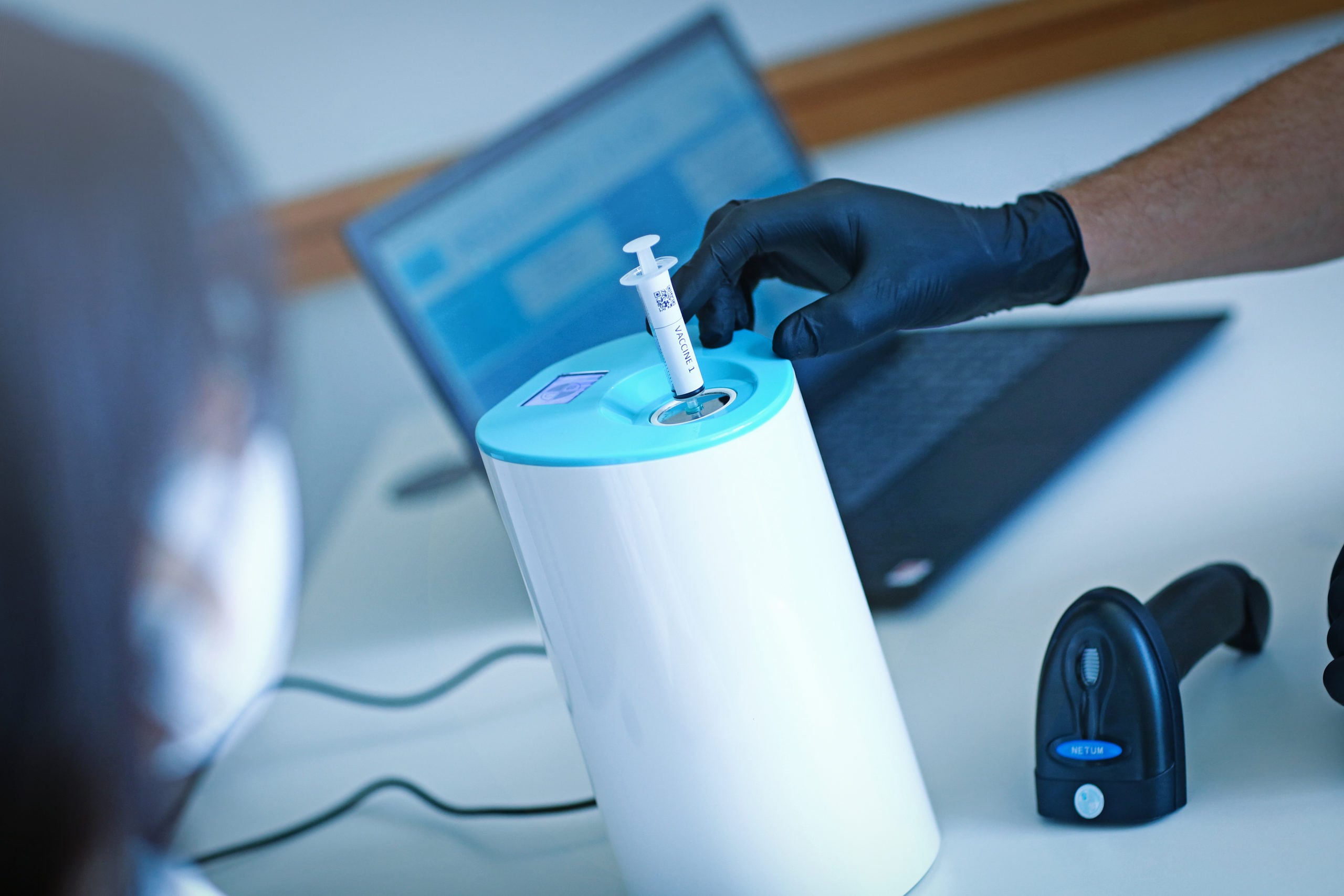
NS PRO destroys a contaminated hypodermic needle in a sealed chamber in just six seconds. The NeedleSmart device heats the needles inserted into the chamber to 1,300 degrees Celsius to kill potentially harmful pathogens, viruses and bacteria adhering to the needle. Within seconds, the needle is compressed into a tiny cold ball and released from the NS PRO device as a safe sphere of metal at the tip of the syringe.
This not only safely destroys the needles, converting them into safe clinical waste and allowing for recycling, but also hugely decreases the amount and level of clinical waste disposal, along with the huge carbon emissions associated with disposing of that clinical waste and its incineration. Previously, the entire needle would have had to be disposed into a plastic sharps box, which carried a limit on how many intact needles could be disposed of.
Now the clinical waste can be split into two parts, with the molten metal ball part of the clinical waste recycled as safe waste and the plastics recycled into the system. This represents a huge advancement for the NHS – which is one of the UK’s biggest producers of carbon – in reducing its carbon emissions and recycling its clinical waste.
NeedleSmart CEO and smart MedTech disruptor, Cliff Kirby said: “By adopting the NS PRO device, the NHS will enjoy a whole host of efficiencies in cost-savings and reduction in carbon emissions, in addition to crucial safety aspects. Using the NS PRO for the safe disposal of hypodermic needles can radically reduce the 100,000 needlestick injuries that occur each year to surgeons, doctors, clinical staff and hospital porters. But the even greater capability for reducing carbon emissions lies in the fact that using the technology means we can reduce the carbon emissions that the NHS produces by 95%.”
Claire Liddy, Managing Director of Innovation at Alder Hey Children’s NHS Foundation Trust, said: “The technology presents lots of opportunities for us to reduce waste and carbon, which is a huge agenda for the NHS and Alder Hey as part of the NHS Carbon Reduction programme. We want to be a hospital that is pioneering in the space of green tech. We think the NHS has a long way to go in the clean, green agenda, but we see the relationship between Alder Hey and NeedleSmart as being a great platform to achieve this as we work towards carbon net-zero.”