
02:42
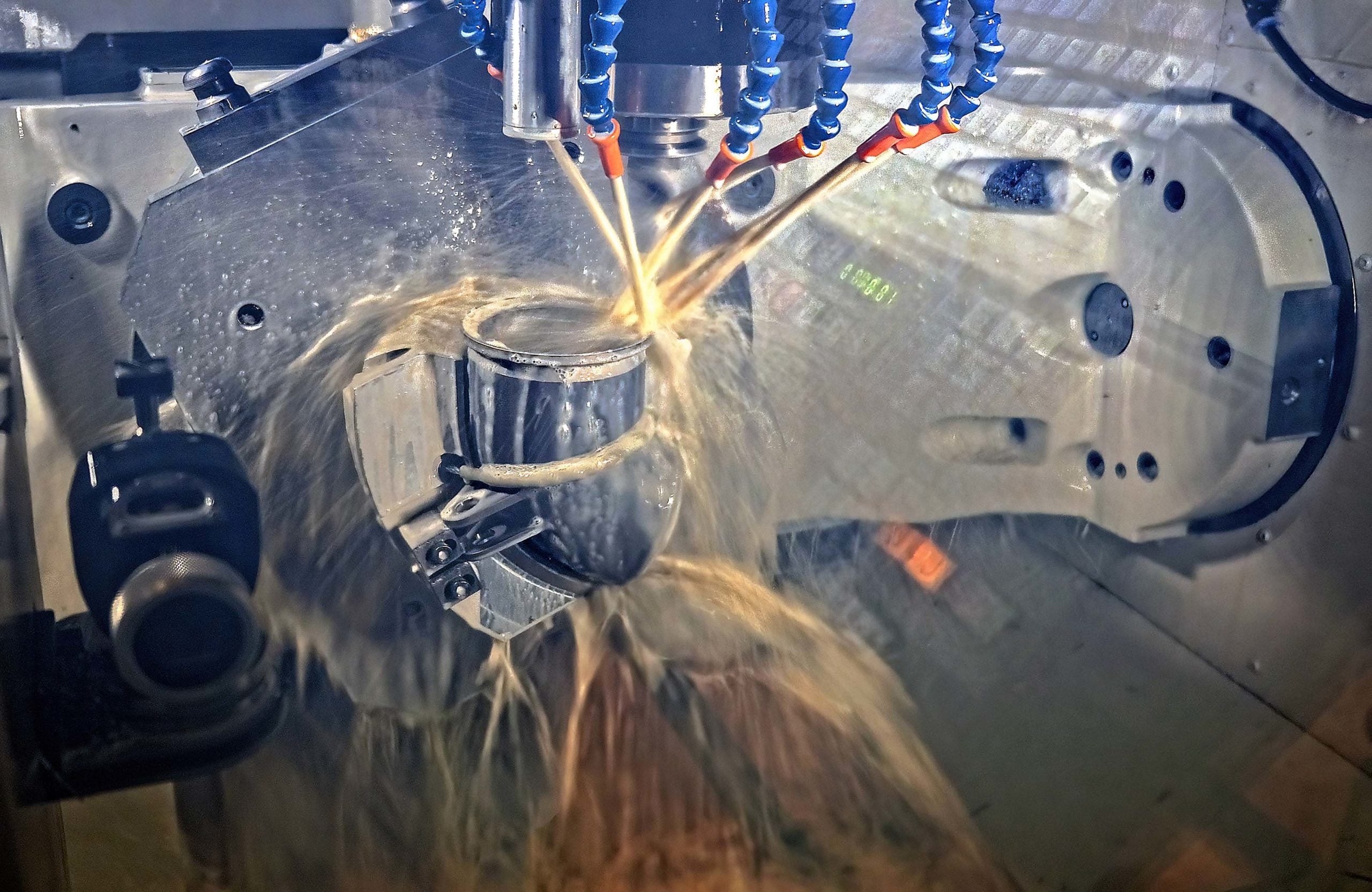
T&R Precision Engineering recently started manufacturing parts from inconel 625 castings for the hot air side of the GE-Safran LEAP-1A turbofan that powers the Airbus A320neo family of single-aisle jets. The problem was that the work involved a labour-intensive sequence of three or four operations on separate machines. Not only was there a significant risk of introducing human error, but it also necessitated the production of a batch of eight components to start each day. Each batch would take one week to complete for the Foulridge, East Lancashire company.
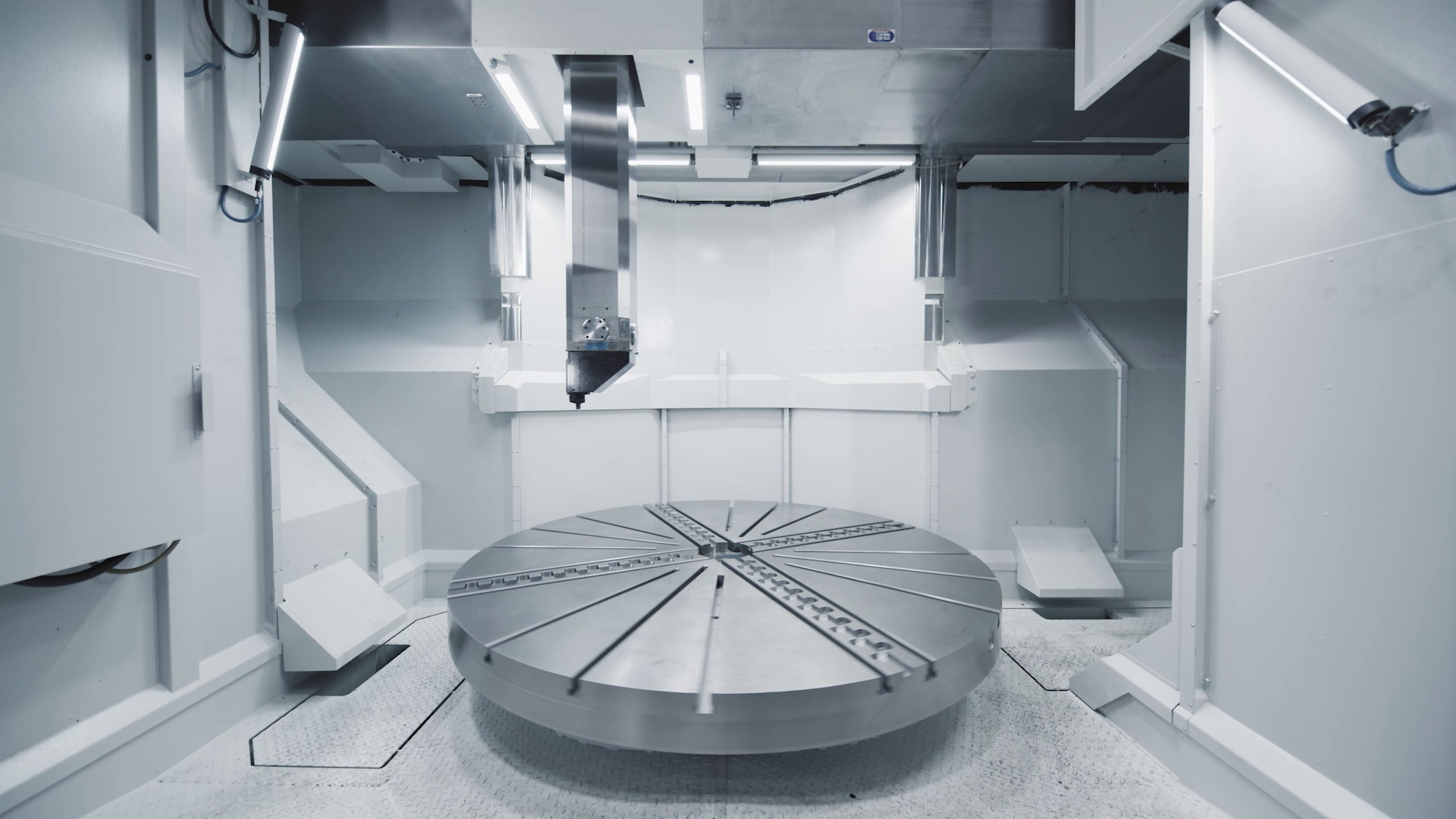
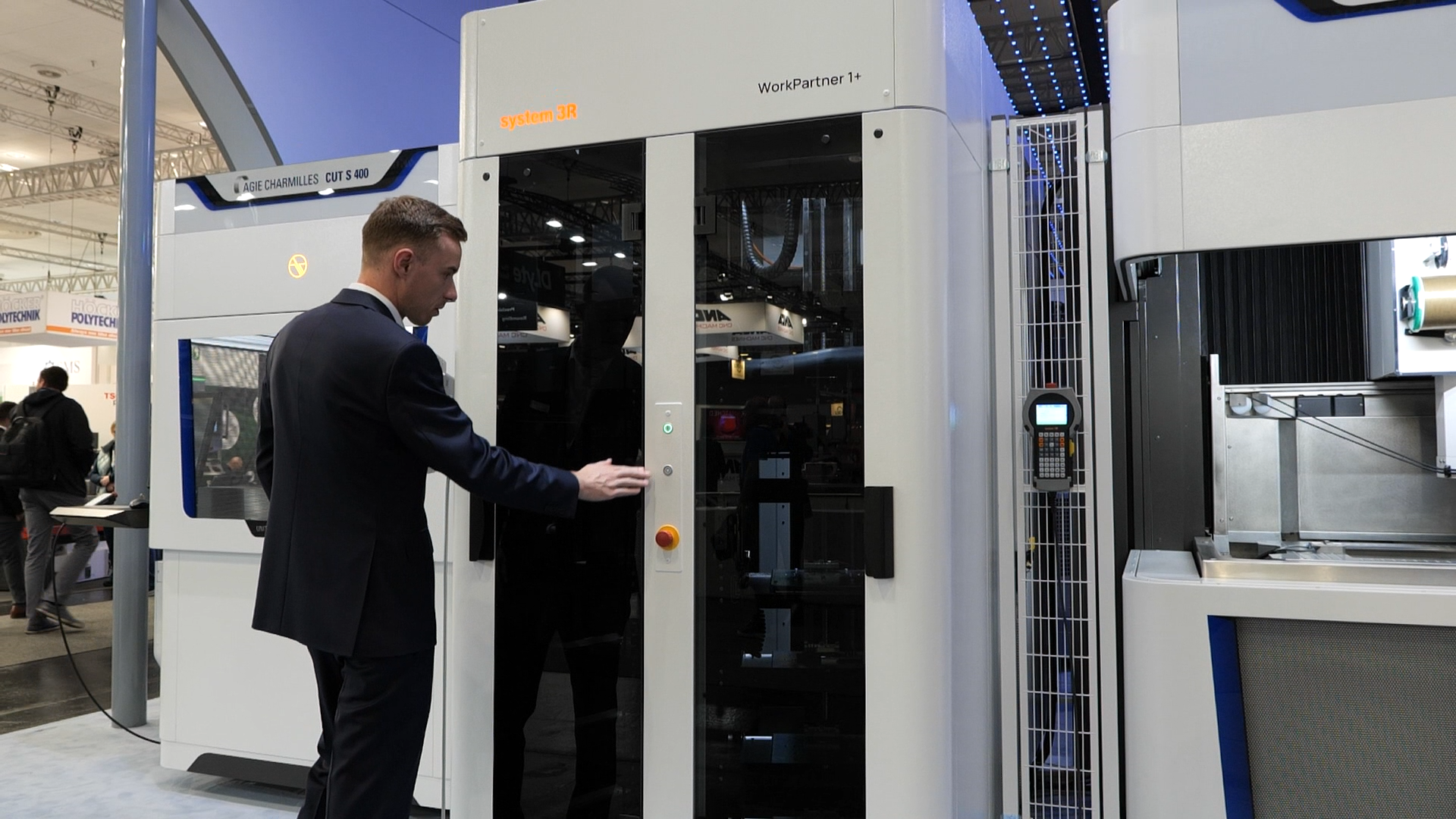
A more efficient process route for the drilling, milling, chamfering and turning operations was sought by the aerospace components supplier. The ideal solution identified by Engineering Manager Graham Gilbert involved the purchase of an Okuma MU5000V 5-axis VMC from NCMT served by a 6-axis industrial robot.
Managing Director Tim Maddison commented: “The improvement in production performance has been enormous across the four different LEAP-1A castings. All parts are now produced in one hit in a one-hour cycle, which means that eight components are now ready the same day rather than after a week. The substantial saving in lead-time is accompanied by vastly less workpiece handling and work in progress on the shop floor, while at the same time, fewer free-issue inconel castings need to be supplied by our US customer at any given time, saving them money as well.”
A further benefit is a 50% reduction in total processing time compared with when the parts were produced in three or four separate operations. An additional saving that Mr Maddison describes as ‘massive’ comes from inspecting every completed part in the VMC in a 10-minute routine at the end of the cutting cycle. So instead of 100% inspection on a CMM, only one part per day now needs to be checked off-line.
The production cell was installed in November 2019, shortly before the start of the pandemic. The aircraft build rate promptly collapsed from 63 per month to zero, but Mr Maddison advised that by the start of 2022 it had recovered to 50 per month, will return to pre-Covid levels by the end of the year and is predicted to rise by a further 20% through 2023.

The contract machinist could not have coped with these increased volumes without investment in the Okuma but is now in a position to take full advantage. The layout of the equipment is such that, there is space for a second Okuma MU5000V to be installed adjacent to the first and to be served with pallets of pre-fixtured components from the same Cellro robotic store.
Several notable technical advances have been incorporated into the latest production cell. One is the provision of Okuma’s turn-cut software in the proprietary OSP machine control that allows, without the need for special fixturing, turned features to be produced that are not on the centreline of a component. Three of the castings require this technology to be used.
Features are machined by rotating a turning tool in the VMC spindle, circular interpolating the X and Y axes at the same rotational speed and feeding the spindle forward in Z. Had interpolation turning not been available, it would not be possible to produce all the parts in one hit. There is no production efficiency penalty through the use of relatively slow turn-cutting, as it is not feasible to turn inconel at high speed due to the material becoming difficult to machine when hot.
To compensate for there being a lot of variability in the shape of the castings, another process improvement is the use of a combination of Renishaw’s Inspection Plus and Productivity Plus probing software packages running in the control coupled with spindle probing of the workpiece. The various elements of a casting can be measured and manipulated by the measurement cycles so that the workpiece can be placed in a position where it can be machined successfully; and if it cannot, the part will be rejected.
Another feature of Okuma machines that T&R Precision appreciates is the Thermo-Friendly Concept design, involving both the machine structure and the spindle. It allows the aero-engine parts to be machined to within ± 25 microns, despite a significant variation of temperature on the shop floor in Foulridge.
Space for 30 machine pallets in the Cellro store allows up to 30 hours of production without operator attendance, so there is no need for a manned night shift and full advantage can be taken of lights-out operation at the weekend. With an OEE (overall equipment effectiveness) over 80%, it adds up to a highly productive facility in its present form, while the flexibility to add a second VMC has the potential to double output and extend unattended running further.