02:42
🎧 – Cutting orthopaedic components
The medical industry specialises in producing a wide range of equipment that is intended for solving a broad spectrum of health issues and it contains numerous parts that vary in dimensions, accuracy, material and shape complexity. To make these parts, the medical industry utilises diverse technological processes where machining plays an essential role. In this industry, some components require intricate machining processes that challenge engineers – requiring process planning, specialist machinery and the right cutting tools to assure effective productivity.
Orthopaedic and dental surgery components are classic examples of complex parts with challenging machining processes. Typical implant materials such as titanium alloys, cobalt-chromium (CoCr) alloys and stainless steel are difficult-to-cut. Many implants have a complex shape, which requires multi-axis machining. The implants and their respective parts are usually small and are characterised by stringent dimensional tolerances and excellent surface finishes. To maximise output, machines require appropriate tools that are characterised by the ability to machine small and miniature parts in limited working spaces, main application groups such as ISO S and ISO M with high accuracy and surface finish requirements.


Small rotating tools require substantially increased rotary velocities. These tools must be balanced and possess dynamic strength to perform effectively at high speeds. The latest products from ISCAR contribute to the influence of the factors. In cutting ISO S and M materials, coolant supply is
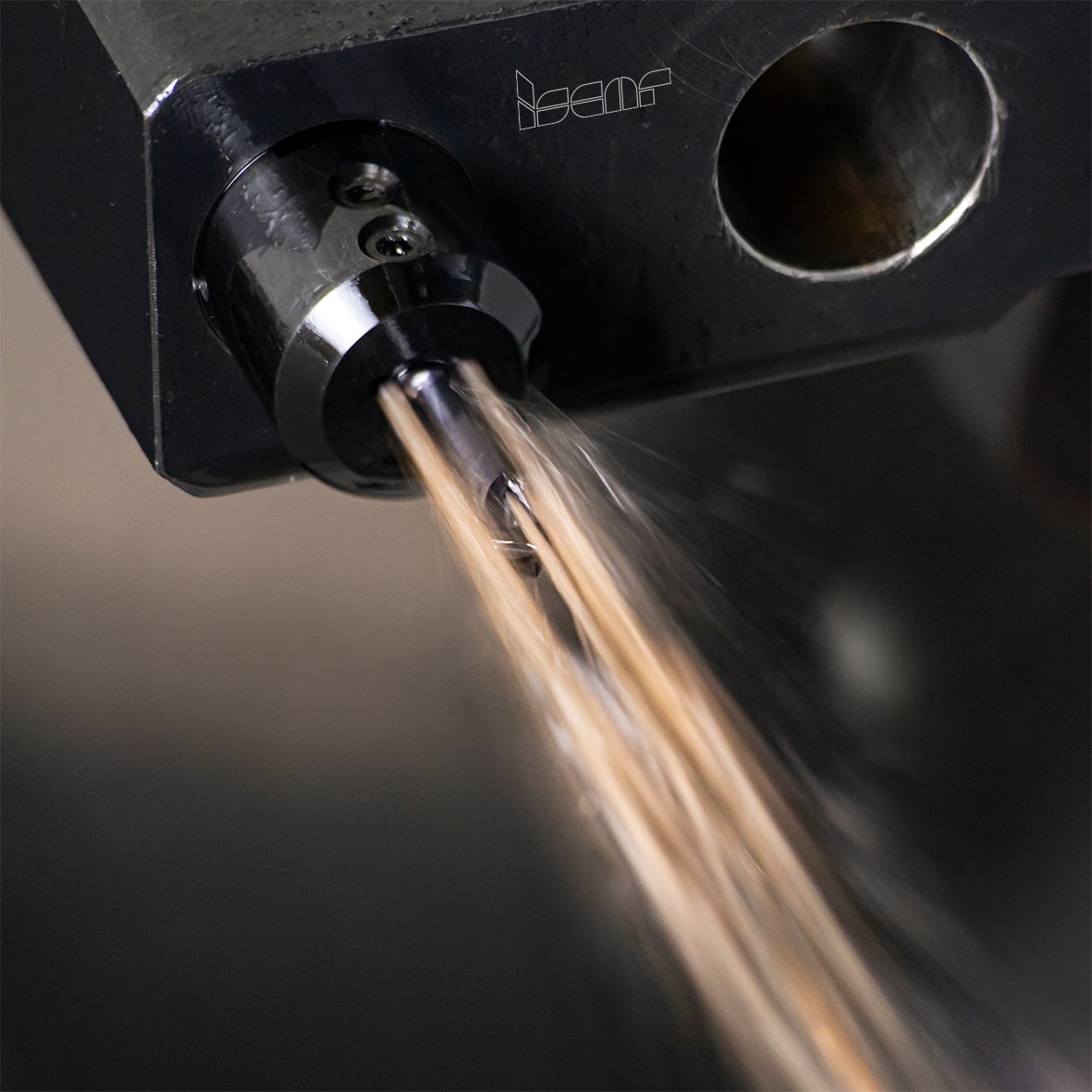
essential for achieving efficiency. The PICCOCUT line of miniature tools was developed specifically for machining small miniature parts. (Fig. 1). This product line has been reinvented over time with a through-tool coolant feature that directs emulsion at the cutting edge. PICCOCUT also features double-sided holders with internal coolant channels pinpointed to the cutting zone and holders with a user-friendly clamping mechanism.
ISCAR also offers turning tools with ISO standard inserts for machining small parts on Swiss-type lathes with new square-shank holders for turning applications (Fig. 2). The holders have the SAFE-T-LOCK clamping mechanism which assures precise and extremely rigid insert mounting, and a high-pressure cooling option. This enables turning under high machining conditions while ensuring better productivity and tool life.
In parting, ISCAR realises that narrow widths of cut contribute highly to cost savings. A new range of compact tools with SELF-GRIP inserts in widths of 0.6 to 1.2mm reduce material waste when parting bars up to 16mm diameter. The tools intended for Swiss-type machines are suitable for machining narrow external grooves.
 .
. 
Small solid carbide drills are commonly used for drilling orthopaedic components. Assembled drills with exchangeable carbide cutting heads provide cost benefits. However, the miniaturisation of drill diameters makes the assembled concept difficult to implement. The lower limit for ISCAR SUMOCHAM drills with interchangeable carbide heads was 6mm diameter but ISCAR’s engineers have succeeded in reducing it to 4.5mm (Fig. 3) – a major step for cost-efficient drilling.
In theoretical terms, ball-nose milling cutters provide a point of contact with curve-based surfaces. These are the main tools for fine milling complex-shaped parts for a high-surface finish. At the same time, generating high-quality surfaces by milling with ball-nose cutters requires diminishing the step size, which in turn increases cycle time. Applying barrel-shaped mills is an effective solution to overcome this obstacle, especially in 5-axis profiling of orthopaedic components. ISCAR has added high-precision ‘cutting barrels’ to the solid carbide endmills (SCEM), indexable profile mills and Multi-Master tools. These cutters are primarily designed for semi-finishing and finishing titanium, exotic superalloys, and austenitic stainless steel. Barrel-shaped mills provide a much smoother surface and reduce the number of cuts while decreasing process time. ISCAR Miniature SCEM and Multi-Master endmills are highly effective for machining complicated orthopaedic parts such as knee prosthesis components (Fig. 4).
Milling, drilling and other operations performed by small rotary tools require considerable rotating velocity. This velocity grows substantially if high-speed machining (HSM) strategies are used and many machine tools cannot facilitate the required speed. ISCAR’s new high-pressure coolant-driven MICRO 90 spindles (Fig. 5) provides a solution. MICRO 90 spindles rotate in the range of 35,000 to 53,000rpm while the main machine spindle remains idle.