

08:24
🎧Quality at speed takes flight

Hexagon’s latest measurement technologies recently made their UK debut at an exclusive Oracle Red Bull Racing partnership event to address the industry’s critical production and skills challenges.
The aerospace industry stands at a critical juncture. With global aircraft production demanding a 20% annual increase through 2027 and Airbus alone planning to ramp A320 production from 48 to 75 aircraft per month, manufacturers face unprecedented pressure. Skills shortages, legacy facility constraints, and the need for precision inspection at scale have created perfect storm conditions requiring revolutionary solutions.
At an exclusive industry event recently hosted at the Oracle Red Bull Technology Campus in Milton Keynes, Hexagon Manufacturing Intelligence unveiled a suite of cutting-edge measurement and automation technologies making their UK market debut. The unveiling of the MAESTRO CMM and the ATS800 laser scanner and tracker are two revolutionary solutions specifically engineered to address these mounting challenges whilst maintaining the uncompromising quality standards the aerospace industry demands.
The Productivity Imperative
Jan Klingen, Vice President EMEA North at Hexagon Manufacturing Intelligence, opened the proceedings by highlighting the transformative potential of new measurement technologies. “The advancements in aerospace manufacturing are noting the significant increase in aircraft numbers and the efficiency improvements in quality inspection, which has reduced costs by 50%,” Klingen emphasised. “The goal is to inspire attendees with the potential of current technology and its applications in professional settings, bringing designs to life with no compromise on quality.”
This productivity challenge was further elaborated by Riana Rarimamonjy, Senior Director of Aerospace Enterprise Accounts for EMEA at Hexagon, who delivered the event’s opening keynote on ‘Productivity with Quality.’ Rarimamonjy outlined how the industry’s current production backlogs and acute skills shortages—exacerbated by early retirements during the COVID-19 pandemic—require strategic technological intervention.
“We all basically want to serve our customers faster, so they can serve their customers,” Rarimamonjy explained. “Agility is a big topic because the trend is increasing across risk-based industries. This customer-centric approach to speed has become particularly critical in aerospace, where maintenance, repair, and overhaul (MRO) demands are growing as fast as new aircraft production.”
Revolutionary Inspection Technologies
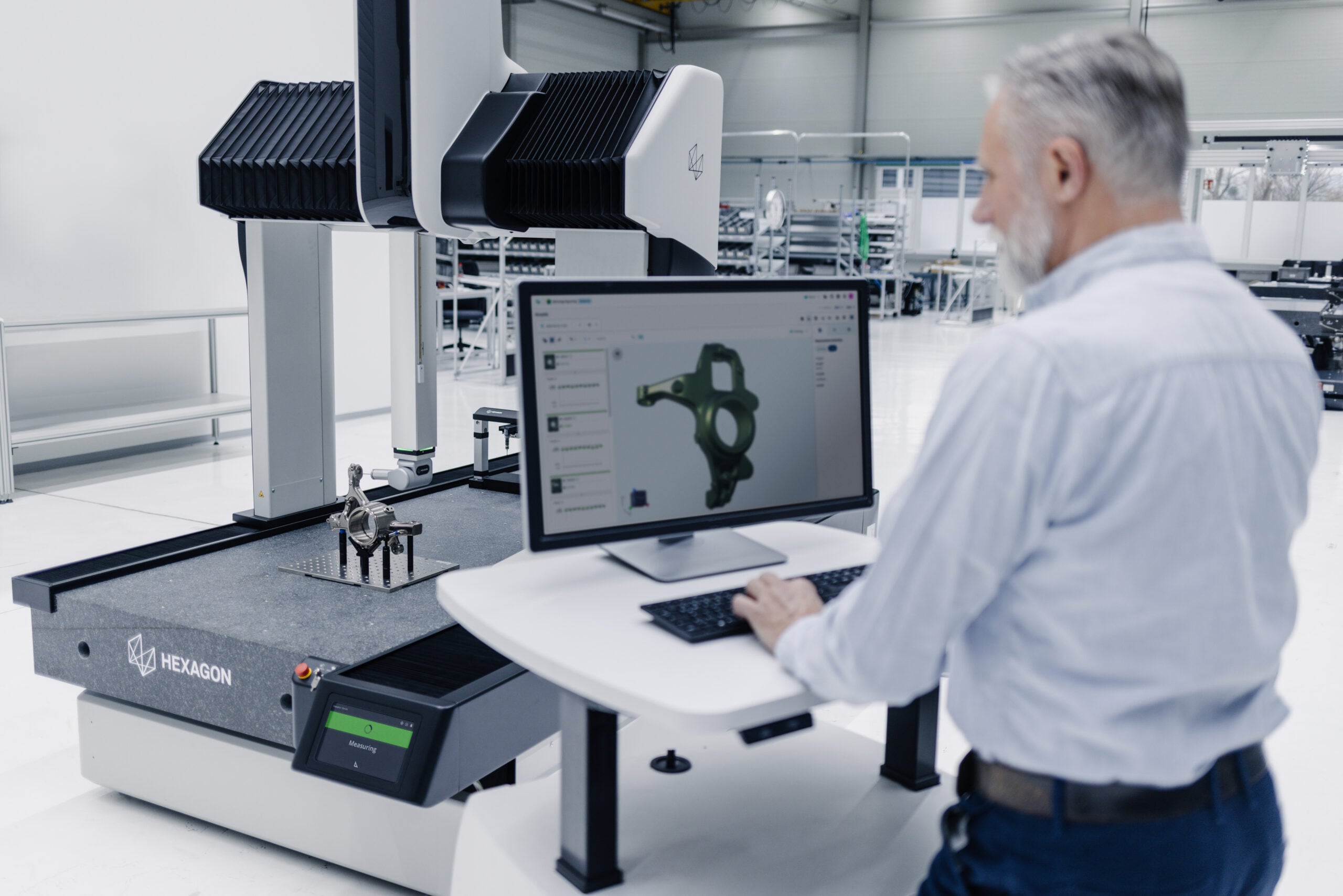
The centrepiece of Hexagon’s UK launch was the MAESTRO CMM, which was described as “the next-generation CMM engineered from the ground up to meet the rising productivity demands of modern manufacturing.” Making its UK debut at the event, MAESTRO represents a fundamental rethinking of measurement technology, designed specifically to address skills shortages whilst delivering speed and precision.
Jörg Deller, General Manager Stationary Metrology devices at Hexagon, explained the system’s revolutionary approach: “Manufacturers told us they needed a next-generation system that tackles rising quality demands and skills shortages. By rethinking our hardware and software from the ground up, rather than iterating on existing systems, we’ve had the freedom to create a high-accuracy inspection solution that is so intuitive that anyone from experts to new hires will be significantly more productive.”
MAESTRO’s breakthrough lies in its four core principles of speed, ease of use, connectivity, and scalability. The system features a newly developed digital architecture incorporating digital sensors, single-cable connectivity, and new controller firmware. Early pilot customers report dramatic productivity gains and reduced inspection lead times, helping avoid production bottlenecks.
Complementing MAESTRO’s precision measurement capabilities was the Leica Absolute Tracker ATS800, a breakthrough in automated large-structure inspection, which also made its UK debut. Rodrigo Alfaia, Laser Tracker Product Director at Hexagon, positioned the ATS800 as addressing aerospace’s most pressing inspection challenges: “Today’s manufacturers need faster, smarter QA processes that scale with production. The ATS800 eliminates hours of setup and ‘boots-on-the-ground’ measurement activity without sacrificing precision, enabling digital, real-time inspection from first part to full-rate production.”
The ATS800’s capabilities are particularly relevant to aerospace’s large-component requirements. With the ability to accurately scan features such as bolt holes, rivets, ribs, and fuselage structures from up to 40 metres away—without scaffolding or physical targets—the system addresses both productivity and safety concerns. Its AI-powered FeatureDetect automatically identifies features from CAD data or panoramic camera feeds, dramatically reducing programming time and specialist operator dependency.
Automation and the Future of Inspection
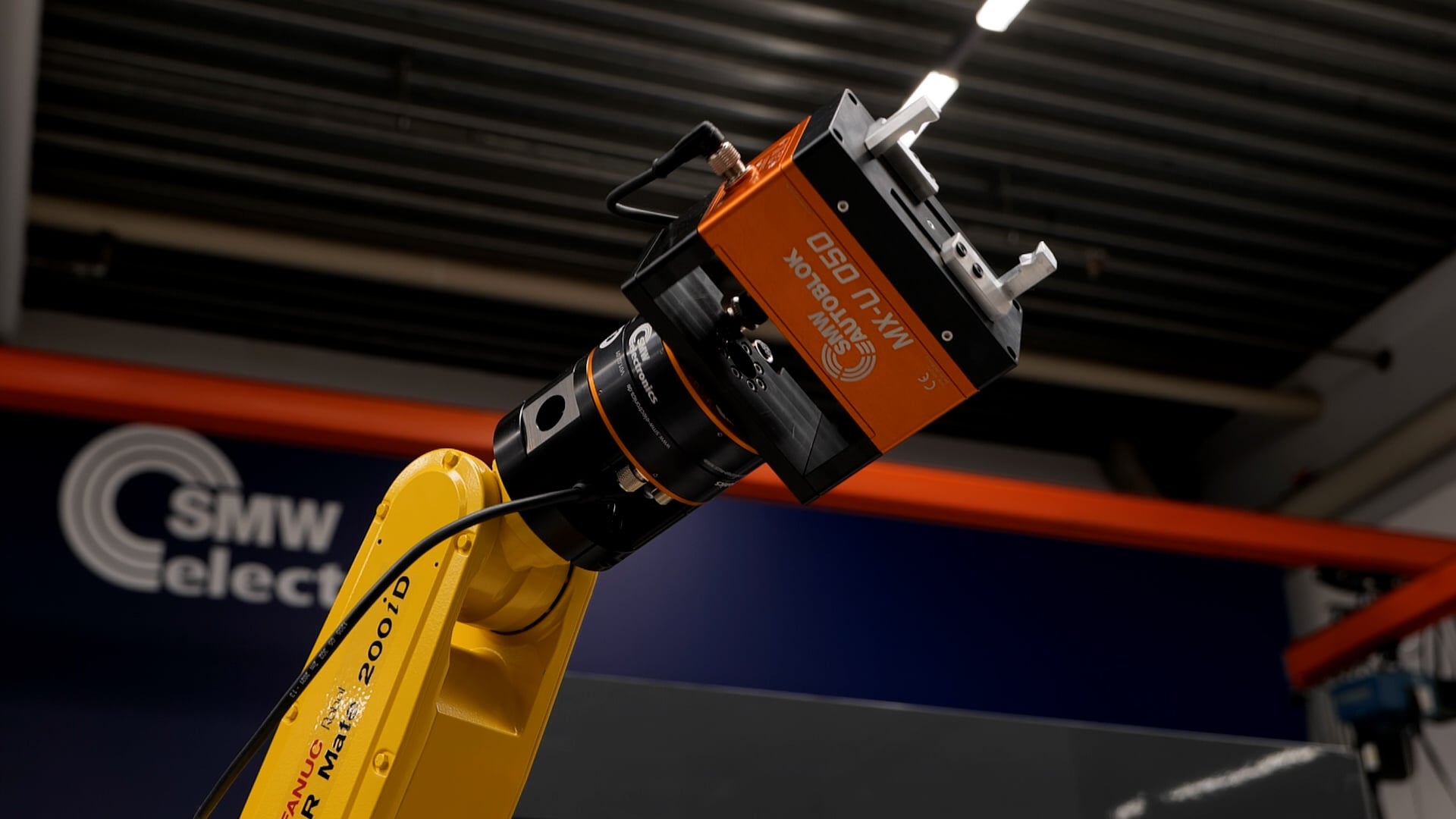
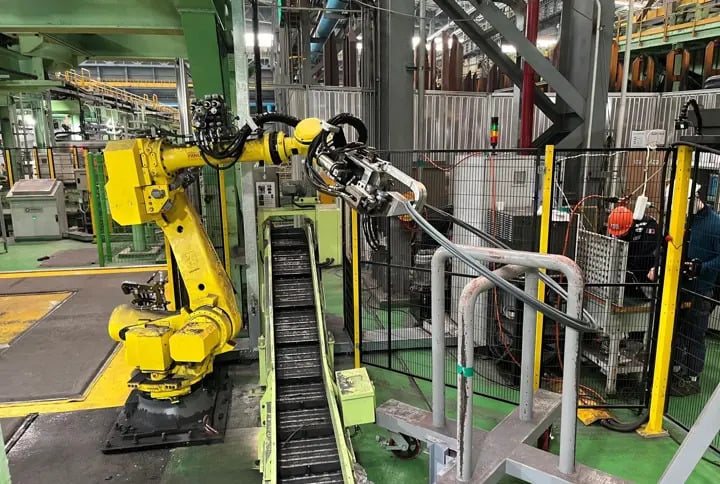
Perhaps most significantly for an industry grappling with skills shortages, the ATS800 enables robotic inspection workflows. Engineered for integration with robot arms, gantries, and Autonomous Mobile Robots (AMRs), the system supports flexible deployment across busy production floors. Its compact design allows mounting in any orientation—even upside down—whilst its robust Software Development Kit enables seamless embedding into robotic processes for lights-out inspection.
This automation capability is exemplified by Hexagon’s PRESTO XL inspection cell, which was unveiled as the latest addition to the company’s modular series of turnkey systems. Aziz Tahiri, VP Global Aerospace & Defence at Hexagon, positioned PRESTO as addressing the industry’s fundamental productivity constraints: “We’ve reached the limits of productivity gains from simply recruiting more people to ramp up production, but successfully automating low-volume aerospace manufacturing has proven challenging due to the high-mix and scale of components. We’ve taken our metrology and manufacturing expertise and built PRESTO to give experienced quality teams what they need to automate inspection processes in a single cell that can be deployed quickly to ramp up production.”
PRESTO XL’s 10 by 7.5m footprint employs two mobile trackers and two mobile scanners, accommodating 3 to 6m long parts and suitable for inspecting at least 50% of major aerostructure components, including fuselage panels, doors, and wing ribs.
As part of the panel discussion at the event, Steve Beasley, CEO of Metrology Engineering Services, illustrated the dramatic impact such technologies can have with a compelling real-world example: “We had an aircraft with 2,146 bullet holes in it. Moving on behalf of insurance to get the data fast, we saved the aircraft and the insurance company about £10m by enabling repair rather than replacement of parts.” This demonstrates how advanced measurement and analysis can transform apparent total losses into recoverable assets whilst addressing supply chain pressures.
Digital Factory Transformation
Beyond individual measurement solutions, Hexagon also used the event to introduce its Digital Factory-as-a-Service offering to the UK aerospace market. This service addresses a critical challenge facing many aerospace manufacturers: decades-old facilities that have been repeatedly adapted without reliable layout data.
Nicolas Lachaud-Bandres, Vice President Industry Solutions at Hexagon, explained the service’s relevance: “Many factories in aerospace have been adapted repeatedly over the decades and no longer have reliable layout data. As manufacturers race to ramp up and modernise, they need precise, up-to-date digital context to make confident decisions. Digital Factory-as-a-Service provides the clarity and control needed to modernise efficiently.”
The service deploys Hexagon’s scanning experts to capture large-scale facility data, transforming it into accurate 3D environments for planning and collaboration. Results are delivered four times faster than traditional site mapping methods whilst reducing travel and on-site meetings by up to 70%. For aerospace manufacturers, this enables scenario testing for new equipment, assembly cells, AGV and collaborative robot integration, whilst reducing ramp-up risk through better space utilisation and clearance checks.
Cultural and Technological Integration
The event’s panel discussion, featuring experts from Oracle Red Bull Racing, Hexagon, Metrology Engineering Services and GKN Aerospace, revealed how quality control is evolving from a final checkpoint to an integrated process. Andy Francis, Technology Director at GKN Aerospace, emphasised this fundamental shift: “Previously, quality was seen as something at the end of the manufacturing process. Now we’re looking at how to bake it into the process from the design phase.”
This transformation is driven by emerging sectors like urban air mobility, where Francis noted: “We’re talking about much higher production rates than we’re used to. We need to get process development and control right in the design phase because the cost of qualification and certification is extremely high.”
Strategic Intelligence and Data-Driven Manufacturing
Dr Ingo Lindner, Senior Director of Strategic Intelligence at Hexagon, provided comprehensive insight into the data revolution transforming manufacturing. With nearly 20 years at Hexagon and leadership in developing the organisation’s most successful products, Lindner positioned data as the cornerstone of future manufacturing excellence.
“We’re experiencing a tsunami of data generated by machines and systems operating at millisecond intervals,” Lindner explained. “This flood of information, whilst offering immense potential, also presents significant challenges in terms of data management, integration, and actionable insight extraction.”
Lindner’s presentation highlighted devices designed to deliver real-time data on both part measurements and machine performance. Complemented by Metrology Mentor software, which automates the creation and execution of measurement routines based on CAD data, these solutions represent the integration of hardware and software to create seamless digital threads throughout manufacturing processes.
The concept of virtualisation emerged as central to Lindner’s vision. “Virtual assembly, virtual jigs, and digital representations of factories allow manufacturers to simulate and optimise processes before physical implementation,” he explained. “This approach reduces costs, accelerates time-to-market, and minimises error risk by enabling ‘first-time-right’ production.”
AI and Predictive Capabilities
The discussions revealed significant potential in AI and predictive maintenance applications. Steve Beasley highlighted emerging opportunities while Andy Francis pointed to virtual measurement technologies that could revolutionise quality control for large, flexible aerospace components. The integration of IT and OT systems promises to unlock advanced analytics and AI applications across manufacturing operations.
Industry Collaboration and Future Outlook
The event demonstrated how cross-industry collaboration drives innovation. Steve Beasley noted: “Companies working together, sharing knowledge through events like this, really do create valuable partnerships.”
With aerospace production rising sharply through 2025 to 2027, and new technologies reshaping aircraft construction, the spatial intelligence and measurement capabilities introduced at this event have the potential to be the cornerstone technologies for smart manufacturing transformation.